In certain corners of the internet, peptides can fix just about anything.
Some popular videos claim they can help repair DNA, offer nerve relief and accelerate wound healing. Others promise shiny hair and lower stress levels. Scroll long enough, and it seems peptides are practically a cure-all. Peptide "stacks" offer customized combinations. "Biohacking" with peptides can allegedly make existing bodily functions work better. Search "peptides" on Instagram and videos of "peptide transformations" and dramatic visual before-and-afters pop up.
But in reality, these types of claims are not backed by reliable data, and the formulas are not guaranteed to be safe.
Here's what to know about peptides, their safety, and where the viral health claims come from.
What are peptides?
Peptides are short strings of amino acids, linked by chemical bonds, CBS News chief medical correspondent Dr. Jon LaPook explained on "CBS Mornings." Amino acids are the building blocks of proteins and do everything from breaking down food to making chemicals in the brain. Peptides can affect the way the body functions at a cellular level, LaPook said.
The human body naturally produces some peptides, and there are more than 80 peptides approved for use by the Food and Drug Administration. Approved peptides can be found in insulin, skincare products, and GLP-1 medications like Ozempic and Wegovy.
But these aren't the only peptides being referenced online. The ones being credited with healing injuries, slowing aging and more are not FDA approved, and their claims lack widely accepted scientific evidence like clinical data or human trials.
Dr. Monica Wang, an associate professor of health policy and management at the Harvard T.H. Chan School of Public Health, said this "marketed for everything" framing "is usually a red flag."
"In many cases, these products or supplements haven't been FDA approved," Wang said. "They haven't been rigorously tested in clinical trials. To have specific products being translated into very confident consumer claims is a red flag."
LaPook said, "There's animal data like rats and mice that suggest they can affect, they have powerful effects on cell function, but there's no gold-standard reproducible randomized trials in humans that show they actually work."
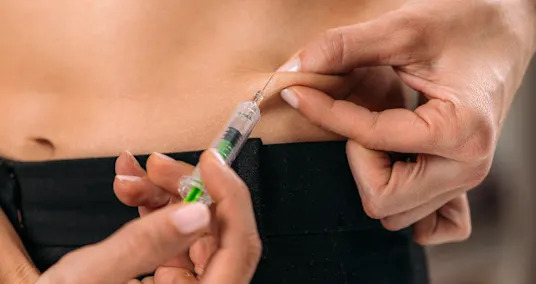
These unregulated peptides are not prescribed, but are ordered online, then mixed and injected by the user.
Dozens of websites have peptides listed, but few appear reputable, with bold claims, generic URLs and limited or no contact information. Many describe the peptides as for research use. Most require a user login before browsing or seeing details of the peptides for sale. LaPook warned that with such unregulated substances, it's hard to know for sure what you're buying.
"There's a gray market out there and it is like the wild, wild West," he said.
Why are peptides so popular?
According to an analysis of Google search data from The Peptide Effect, U.S. peptide-related searches hit 10.1 million in January 2026. About 60% of those searches were for GLP-1s, commonly used for weight loss, but millions of other searches were for performance-related, anti-aging and healing peptides. Searches for so-called longevity peptides linked to anti-aging, heart health and metabolic regulation have increased by nearly 300% year-over-year.
The hashtag for peptides on TikTok has been used on over 270,000 videos, some racking up hundreds of thousands or even millions of views. On Instagram, the hashtag has been used on over 654,000 posts.
Wang said that the desire for a simple solution to real problems is driving the interest in peptides and other viral health trends. That, coupled with e-commerce and social media algorithms, can result in people seeing a huge amount of content about unproven treatments.
"The health problems that people are trying to solve, they're real, and they're also usually very complex, but the solutions being marketed are often oversimplified," Wang said. "When you see a new trending fix, it's more about, 'What is a product that can be marketed, that people will buy, that are conveyed as simple, fast, and promise control?' It taps into the consumer economy more than the health care economy."
Health and Human Services Secretary Robert F. Kennedy Jr. has also voiced support for peptides. On the "Joe Rogan Experience" podcast last month, Kennedy said he was a "big fan" of the substances and that he has used them himself, "with really good effect on a couple injuries." He said he wanted to make over a dozen peptides that compounding pharmacies are currently not allowed to sell "more accessible," but did not offer details.
LaPook said that Kennedy's plan "raises the question, if the FDA is making these things more widely available, what are the safety and efficacy studies that will have to happen?"
Spoiler alert! "NCIS" star Rocky Carroll talks major twist in the show's 500th episode
Latest on jury deliberations in California social media addiction case
LATEST POSTS
- 1
 The Way to Fruitful Weight reduction: Individual Wellbeing Excursions
 - 2Congolese rape survivors search in vain for medicine after USAID cuts
- 3Doctors looking into hormone therapy as a way to ward off dementia in women
- 4Vietnam rethinks its flood strategy as climate change drives storms and devastation
- 5See the 'amazing' photos of Earth taken on historic Artemis II moon mission



- SpaceX shatters its rocket launch record yet again — 165 orbital flights in 2025
- Instructions to Pick the Right Gold Speculation Procedure: Exploring the Market
- Support Your Body: A Manual for Smart dieting and Sustenance
- Find Unexpected, yet invaluable treasure Excursion Rentals
- PA accuses Israel of 'human trafficking' after planeload of Gazans arrives in South Africa
- Ten Awesome Authentic Realities That Will Leave You Interested
- 10 Demonstrated Tips to Boost Your New Android Cell phone: A Thorough Aide
- Ariana Grande and Jonathan Bailey will reunite for 'Sunday in the Park With George'
- FDA claims on COVID-19 vaccine safety are unsupported by reliable data – and could severely hinder vaccine access