
THE GIST
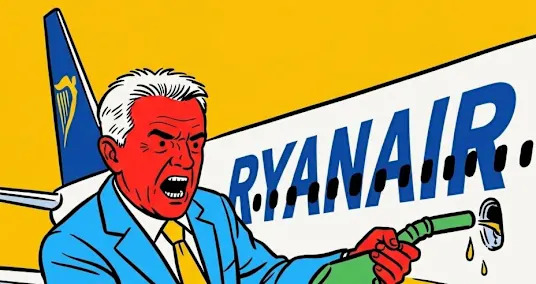
Europe's biggest airline is sounding the alarm. If jet fuel supplies tighten this summer, Ryanair says it may have to cancel flights. What looks like a commodity story is quickly turning into a capacity story, with knock-on effects for fares, tourism, and airline profits.
WHAT HAPPENED
Michael O'Leary, Ryanair's famously unfiltered CEO, has delivered the kind of blunt warning he tends to specialize in. If fuel supply risks materialize in June, July, or August, airlines will have to start cutting flights.
This is not hypothetical.
The war involving Iran has disrupted one of the most critical arteries in global energy markets: the Strait of Hormuz. Roughly a fifth of the world's oil normally flows through that corridor. With supply routes under pressure, jet fuel markets have tightened sharply.
Prices have surged. Jet fuel recently traded around $195 per barrel, more than double last year's levels, reflecting both supply disruption and the kind of panic buying that tends to make supply disruptions worse. Oil itself has been volatile, with Brent briefly pushing above $100 before pulling back on hopes of a shorter conflict.
But for airlines, price is only half the story.
Ryanair has hedged about 80% of its fuel needs through March next year at roughly $67 per barrel. That gives it a buffer against rising costs in the short term. Many competitors are less protected, leaving margins exposed.
The bigger concern is physical availability.
Speaking to Sky News, O'Leary flagged that up to 10% to 20% of jet fuel supply could be at risk this summer if the conflict drags on. That is not a marginal squeeze. That is enough to force airlines to ground aircraft or reduce schedules. He also noted that assurances from fuel suppliers only stretch to late May, and beyond that, no one is willing to commit to anything.
The UK is particularly exposed. As O'Leary told the Guardian, it relies on Kuwait for roughly a quarter of its jet fuel imports, making it more vulnerable than other European markets if Middle Eastern flows are disrupted.
So far, airlines have not made large-scale cancellations. Demand remains strong, and Ryanair still expects passenger traffic to grow about 5% in the April to June period, with fares rising modestly by 3% to 4%.
But the tone is shifting.
WHY IT MATTERS
Our analysts just identified a stock with the potential to be the next Nvidia. Tell us how you invest and we'll show you why it's our #1 pick. Tap here.
This is where the story moves from headline risk to structural stress.
LATEST POSTS
- 1
 6 Web-based Staple Help You Can Trust
 - 2How to watch 'A Charlie Brown Christmas' for free in 2025
- 3Figuring out the Justification for Separation: To blame and No-Shortcoming
- 4A soft launch, an unfollow and a lot of questions: Breaking down the 'Summer House' romance blowing up group chats
- 5Vote In favor of Your Favored Treat




- Everyone knows F1 is for the girls. I wandered into the Las Vegas desert to find out why.
- Procter & Gamble changes Crest toothpaste packaging to address Texas AG fluoride concerns
- Finding the Universe of Computer generated Reality: Individual Encounters
- Fire Allegedly Triggered by Wedding Cake Sparkler Causes Venue to Go Up in Flames, Leaving Groom with Second-Degree Burns
- Top 5 Top of the line Books of the Year
- DEA seizes 1.7 million counterfeit fentanyl pills in Colorado storage unit
- The risk of falling space junk hitting airplanes is on the rise, experts warn
- Southern Californians, your health insurance costs could rise in 2026
- 2024 Watch Gathering: The Best Watches of the Year


